moving:
Iron Hi

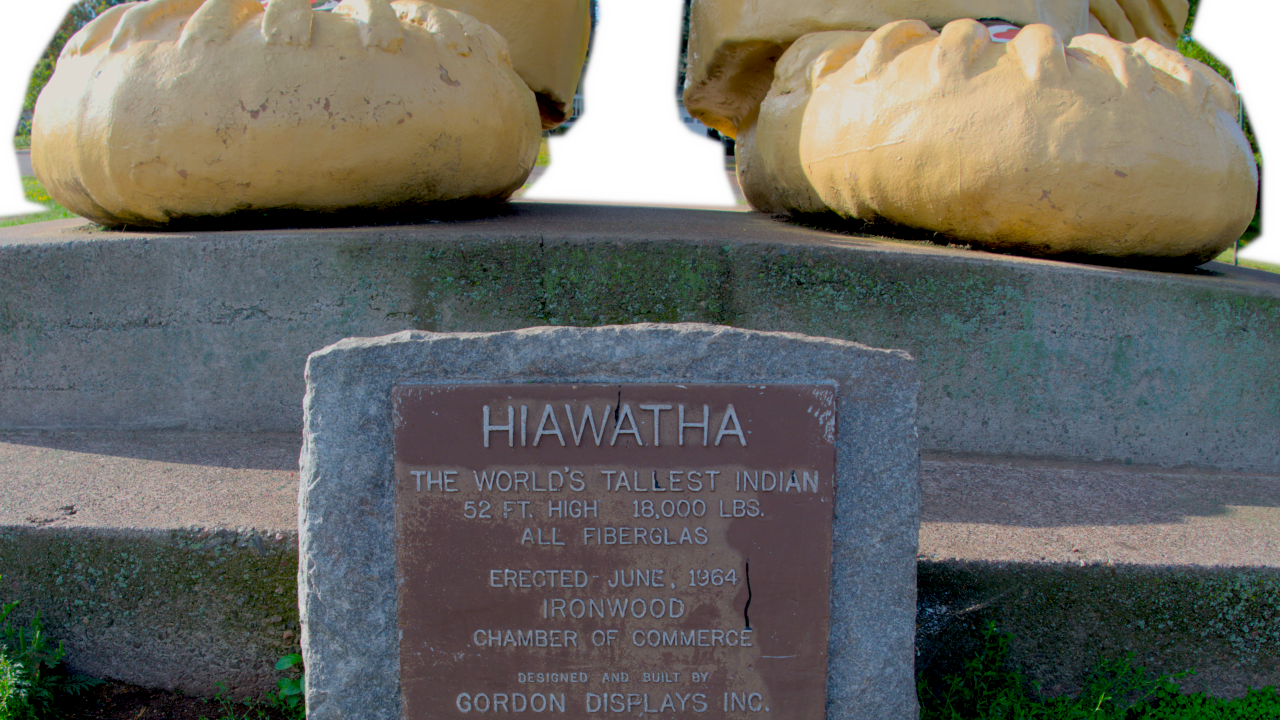
Ironwood (MI) has a Hiawatha statue erected by the Chamber of Commerce in 1964. It is a contemporary of the Mufflerman which were built in Venice (CA). Hiawatha was designed and built by Gordon Displays in St. Paul (MN). According to the signage, it is made out of "FIBERGLAS" (sic), which is about the fourth most popular way to spell the miracle substance (fiberglass, fibreglass, fibreglas and fiberglas).
The signage also claims this Hiawatha is "The Worlds Tallest Indian" at 52 feet tall and 18,000 pounds. This is likely still true, as Dignity of Earth and Sky erected in 2016 on Sioux country--Chamberlain (SD)--is two feet shorter than Hiawatha erected some fifty years earlier.
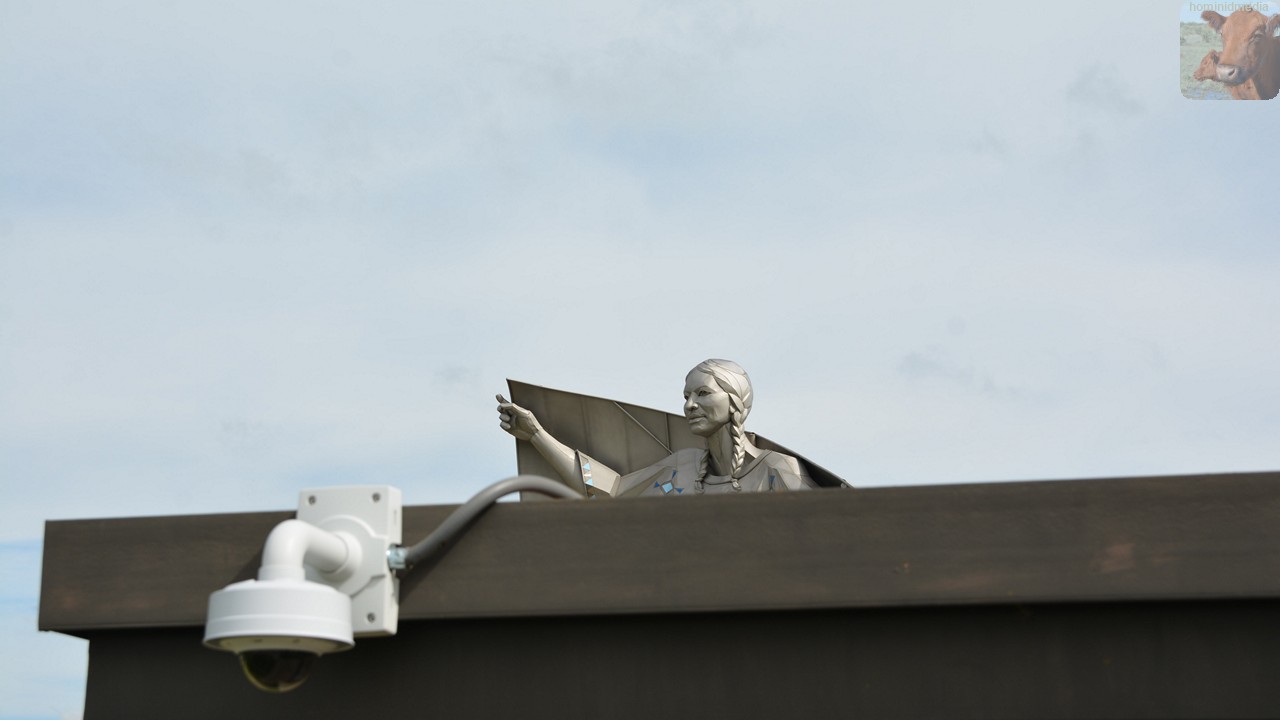

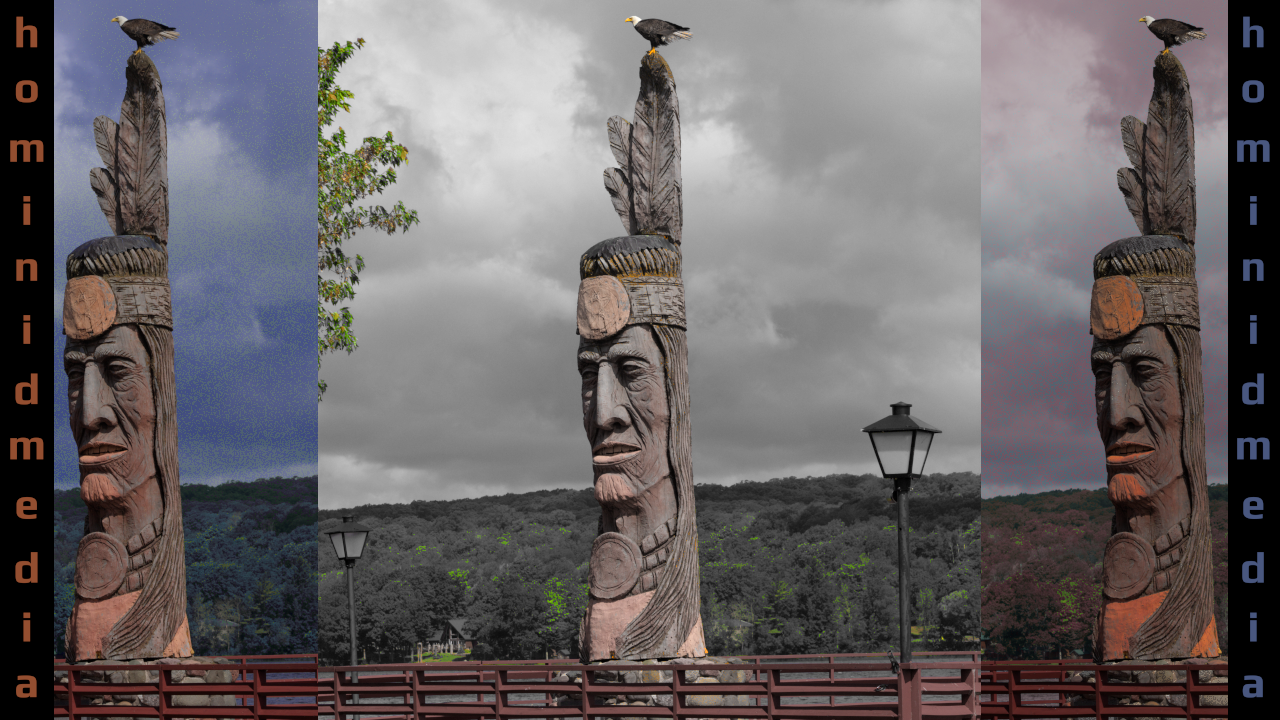
There is serious potential for caricaturization in projects like Hiawatha and Dignity. Take the native in Wakefield (MI), for example, sitting along the quarry pond of some massive iron deposit that was mined, ore docked and shipped to become industry. Another example--in St. Germain (WI) was pulled from the town's main intersection (a stop sign) a few years ago. The Wakefield and St. Germain statues are more folk art than mean spirited. Both were carved out of huge logs by real artisans. Today this is the territory of lumberjack adjacent chainsaw-slingers who sell black bears off the highway, pretty up the dead trees in peoples yards with fake eagle nests and carve ice sculptures to stave off wintertime cabin fever. But today they don't feature overt racial stereotypes in these endeavors.
"Hiawatha" could probably not be built today. It isn't because of some red-faced Sambo-ism. The statue is tasteful, looks like a Dakota/Ojibwe outfit with quill work, feathers, frills and needlework. It couldn't be built today because it is no longer tasteful for colonizers to build statues of subalterns. Outsiders who adapt and capitalize upon indigenous mythology are viewed with suspicion. Three reasons for this suspicion is because writers, like Longfellow, used poetic license on their sacred stories; anthropologists, like Henry Rowe Schoolcraft, conflated seemingly unique tribal identities as storytelling tropes to universalize first nations; and capitalists, like the Ironwood Chamber of Commerce, built useless fiberglass structures in the middle of land promised to you by a treaty regime that was ignored by capitalist and politician alike.
On the other hand, it might seem that the statue, ethnography and epic poetry are colonial mockery of conquered Ojibwe (or Dakota) people. People weren't so cynical and ethno-nationalist in years past. Contextualized in their own time--the most vile colonizers are not those who remember their vanquished predecessors with art, sympathize the natural frontier and understand humanity's universal savage psychology. Still, you couldn't build any of these today without tribal imprimatur and design. Having an insider make the art allows for a more authentic representation. This is how it worked out with "Destiny..." at the most American location of all: a free-way rest stop in South Dakota.
The Gordon Displays statue, Longfellow poem and Schoolcraft mythology were all describing something similar--"From the great lakes of the Northland, From the land of the Ojibways, From the land of the Dacotahs..." (Longfellow)--about a people who fished on "Gitche Gumee" (Lake Superior). This is they mythical Hiawatha, an Ojibwe. But, an Iroquois named Hiawatha might have been real. The (presumably) real guy was an Onondaga chief and co-founder of the Iroquois Confederacy. He was from upstate New York. The confederation's western most tribe--the Oneida--had settlements in Green Bay (WI) but the Lake Superior Chippewa (Ojibwe) populated the southern shore of the big lake--uncontested after 1745 when they won the battle of Strawberry Island and drove off the Dakota toward the plains. Longfellow describes the poetic license in his notes and cites the ethnographer Schoolcraft [*] but as an historical it is confusingly ahistorical.


sources:
[*] "This Indian Edda — if I may so call it — is founded on a tradition prevalent among the North American Indians, of a personage of miraculous birth, who was sent among them to clear their rivers, forests, and fishing-grounds, and to teach them the arts of peace. He was known among different tribes by the several names of Michabou, Chiabo, Manabozo, Tarenyawagon, and Hiawatha...the Iroquois form of the tradition, derived from the verbal narrations of an Onondaga chief...Into this old tradition I have woven other curious Indian legends...The scene of the poem is among the Ojibways on the southern shore of Lake Superior, in the region between the Pictured Rocks and the Grand Sable."